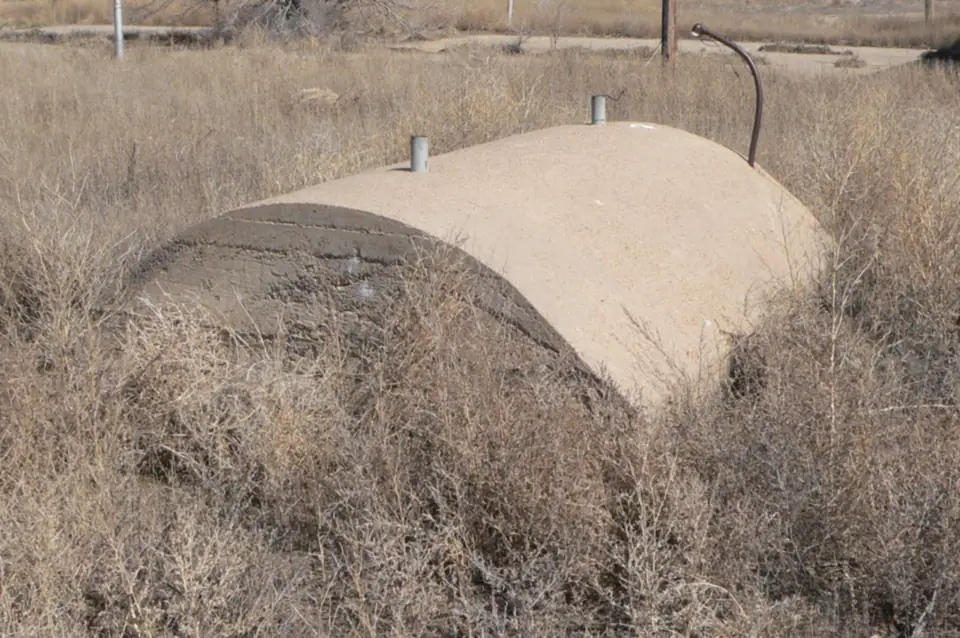
Bushland is an unincorporated community west of Amarillo along I-40, known locally for its school district and for the USDA research laboratory nearby. Many homes here sit on an acre or more, with private wells and septic systems, open views to the west and few trees to slow the wind. Larger lots make in-ground yard shelters an option, but where you put one matters more than on a city lot.
Choosing the spot
- Close to the door you'll use. FEMA's guidance favors a shelter you can reach quickly. On acreage it's tempting to put the shelter out of the way, but every extra step in hail, wind and darkness counts. Aim for a few seconds from the back door or garage.
- Away from septic tanks and lateral lines. The installer needs to know where the tank, lines and drain field are before digging. Excavating into a septic field is expensive to fix, and the shelter shouldn't sit where effluent can seep toward it.
- Clear of the well and buried lines. Mark the well, the water line to the house, propane lines and any buried electrical runs to shops or barns. Call 811 before any digging; it's free.
- On higher ground. Avoid low spots where runoff collects after a downpour. The entry should be above grade with ground sloping away from it.
- Not where debris will pile up. Keep the door clear of where a barn, carport or trees could collapse over it.
Caliche and digging
Like much of the Panhandle, the Bushland area can have hard caliche layers a few feet down. Installers deal with it routinely, but it can slow excavation and add equipment costs. A good quote will mention it rather than surprise you on install day.
Garage floor and above-ground options
If you have an attached garage, a garage floor shelter avoids the walk outside entirely, and an above-ground safe room in the garage or a utility room avoids digging. On larger rural homes, some families install one shelter in the house or garage and keep an older cellar as a backup.
Permits in an unincorporated area
Because Bushland isn't an incorporated city, ask your installer or the county what permits or inspections apply. Either way, register the shelter's location with county emergency management if they keep a registry. On a rural road, that helps responders know to check for you.
Get a quote
Share your ZIP code, whether you prefer a yard, garage or above-ground shelter, and how many people it needs to hold. One local installer who serves Bushland will follow up. See the cost guide for typical ranges.
Common questions
How far from the house should a yard shelter be?
As close as practical, ideally a few seconds from the door you will use in a storm, while staying clear of the foundation, septic system and buried lines.
Do I need to call 811 before installing a shelter?
Yes. Call 811 before any digging so utility lines are marked; it is free, and your installer may do it for you. Private lines you installed yourself, such as power to a shop, are not marked by 811, so point them out to the installer.
Can I reuse an old storm cellar?
Many old cellars were not built to modern tornado standards and may have weak doors or cracked walls. Have it assessed, and consider a new tested shelter if the door or structure is in doubt.